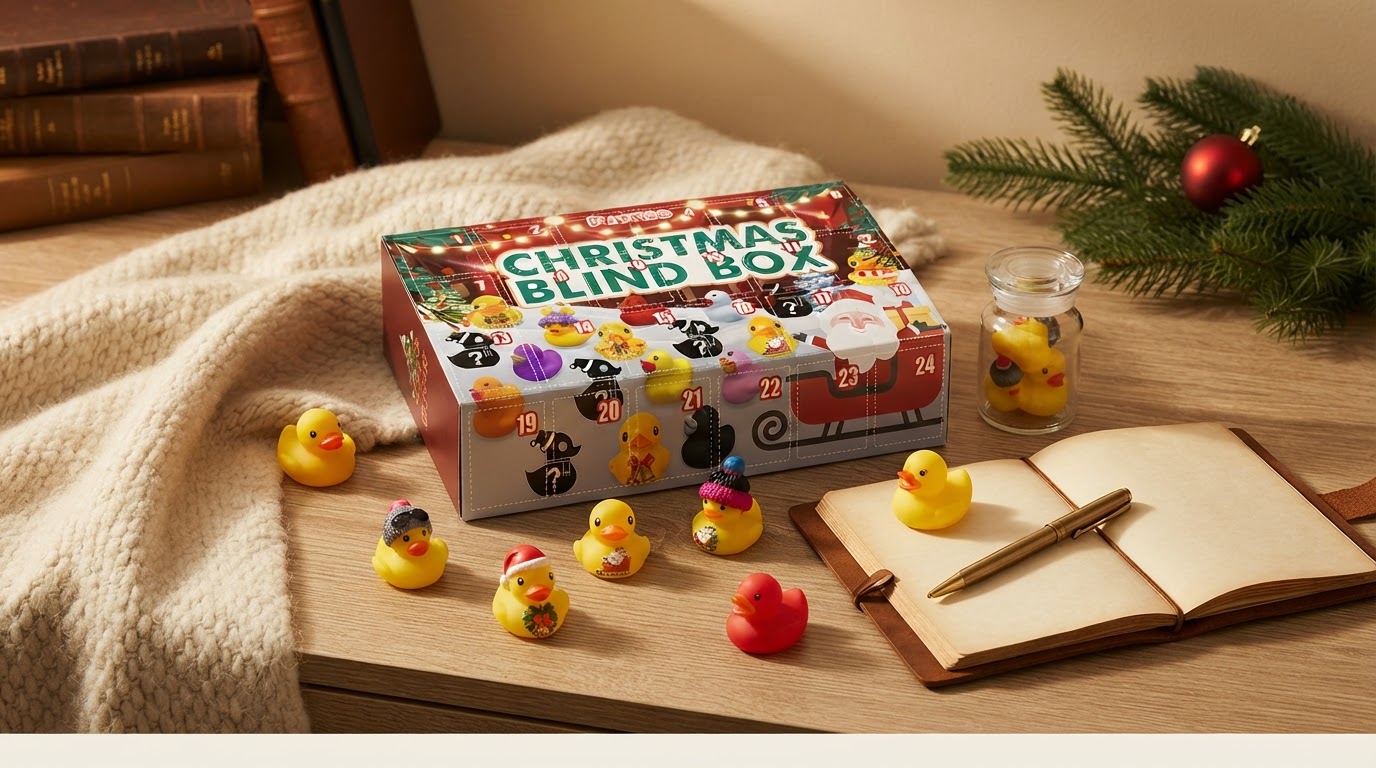
Optimizing the Christmas Mini Duck Blind Box Tradition
 Maya ChenContributing Editor
October 1, 2026. This analysis evaluates the functional utility and market positioning of the Christmas Mini Duck Blind Box for consumers seeking high-retention holiday gifts. It is intended for procurement-minded parents and collectors who prioritize structural durability over seasonal novelty.
The Saturation of Seasonal Disposable Toys
The conventional wisdom says that holiday countdowns require high-cost electronic gadgets or sugar-heavy consumables to maintain engagement throughout December. However, the toy industry is currently grappling with a surge in "single-use" plastic waste that fails to provide long-term play value. According to The Toy Network, a standard 24-day rubber ducky set constitutes a significant volume of physical inventory—24 individual pieces—that must justify its footprint in the household. Most consumers fall into the trap of purchasing low-density foam or brittle plastic alternatives that degrade before the new year. Here's the part nobody talks about: the psychological fatigue of the Christmas surprise toy box model occurs when the quality of the surprise does not match the anticipation of the opening ritual. If the internal component lacks a distinct identity or functional weight, the "blind box" mechanic becomes a liability rather than an asset. The market is flooded with generic figurines that lack the specific thematic cohesion required to sustain a 24-day narrative. When evaluating a christmas rubber duck advent calendar, the buyer must account for the cumulative storage cost and the eventual transition of these items from seasonal decor to permanent toy collections. The failure of most advent products lies in their inability to survive the transition from the cardboard housing to the bath or playroom.
Structural Integrity of the Christmas Mini Duck Blind Box
Run the math: a standard advent box, such as the one documented by Curious Minds Busy Bags, typically measures approximately 14" x 11.25" x 2.5". This volume must contain 2" ducks that are sufficiently weighted to remain upright. The Christmas Mini Duck Blind Box addresses the common industry failure of "top-heavy" designs that tip over in water—a frequent complaint in lower-tier christmas rubber duck advent calendar reviews. By utilizing a high-density rubber composite, these ducks maintain a lower center of gravity. This is not merely an aesthetic choice; it is a requirement for the product to function as a bath toy rather than a static shelf ornament. The blind box format specifically leverages the "variable reward" schedule, which is more effective at maintaining engagement than a transparent Christmas surprise toy box. Each duck in the Christmas Mini Duck Blind Box series is designed with distinct holiday iconography—Santa hats, reindeer antlers, or snowflake patterns—ensuring that the visual novelty does not diminish by day twelve. Furthermore, the external packaging is engineered with reinforced perforated doors. This prevents the common "secondary opening" issue where a child accidentally reveals the contents of day 15 while trying to access day 14. The material choice also resists the mold growth often associated with hollow bath toys, provided they are dried correctly, making the Christmas Mini Duck Blind Box a multi-year asset rather than a December-only expense. The logistical advantage here is clear: you are purchasing a curated collection under the guise of a daily event, maximizing the ROI of the holiday budget.
Evaluating the Utility of Blind Box Collections
When selecting a Christmas Mini Duck Blind Box, the buyer should ignore the marketing fluff and focus on the technical specifications of the assortment. A high-quality Christmas surprise toy box should be judged on its variety and the physical tactile response of the items inside. I'll change my mind when a digital-only advent experience can replicate the fine motor skill development and sensory feedback provided by a physical christmas rubber duck advent calendar. Until then, the physical blind box remains the superior delivery mechanism for holiday anticipation. Use the following checklist to determine if a specific set meets the necessary criteria for a successful season:
- Material Density: Ensure the ducks are composed of non-toxic, high-density rubber that allows for upright buoyancy.
- Design Variance: Verify that the 24 pieces are unique designs rather than color-swapped duplicates of the same mold.
- Perforation Strength: The box doors must be sufficiently sturdy to prevent accidental spoilers but manageable for small hands.
- Size Consistency: Standard 2" dimensions are the benchmark for compatibility with other bath toy accessories and storage bins.
- Thematic Cohesion: The set should follow a logical visual progression that culminates in a "hero" duck for December 24th.
Shop Christmas Mini Duck Blind Box here